In this guide
- What Is the Difference Between Sliding and Hinged Wardrobe Doors?
- Sliding vs Hinged Wardrobe Doors: A Quick Comparison
- Which Doors Suit Which Room?
- Which Doors Are Best for a Small Bedroom?
- Do Sliding or Hinged Doors Cost More?
- How Do You Decide Between Sliding and Hinged Doors?
- Can You Fit Wardrobe Doors Around Sloping Ceilings?
- Sliding vs Hinged Wardrobe Doors: FAQs
- Choosing the Right Wardrobe Doors With Confidence
Sliding wardrobe doors are usually the better choice in a small or narrow bedroom because they need no clearance to open, while hinged doors suit larger rooms where you want to see the whole interior at a glance. This guide compares sliding and hinged wardrobe doors on space, access, style, cost and upkeep, so you can choose with confidence. We design, build and fit both across Manchester, Cheshire and the North West.
The short version
- Sliding doors save floor space and suit small or narrow rooms
- Hinged doors give full, open access and suit larger rooms
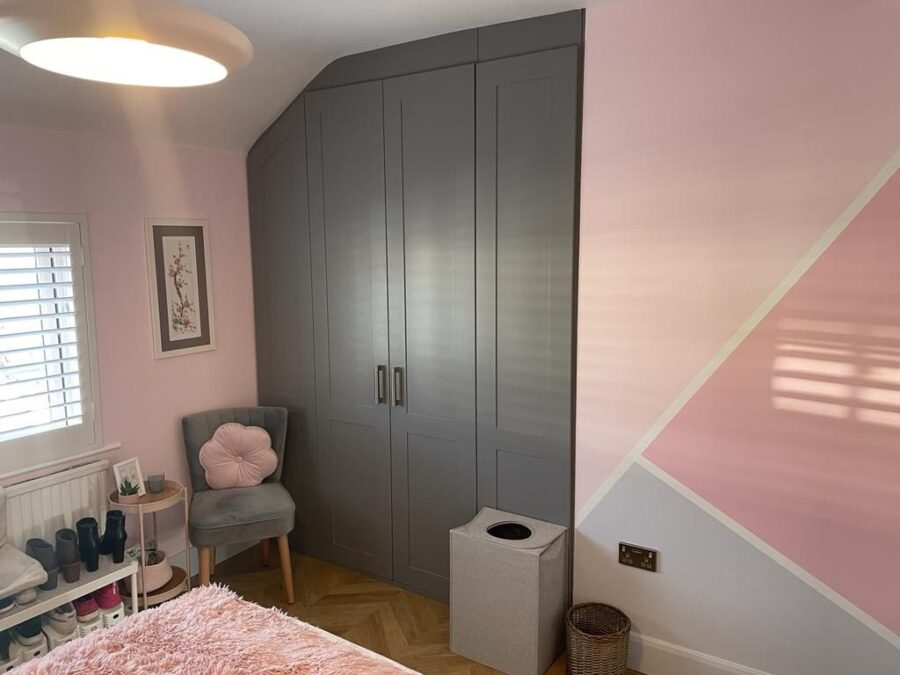
- Sloping ceilings usually favour hinged doors or open frames
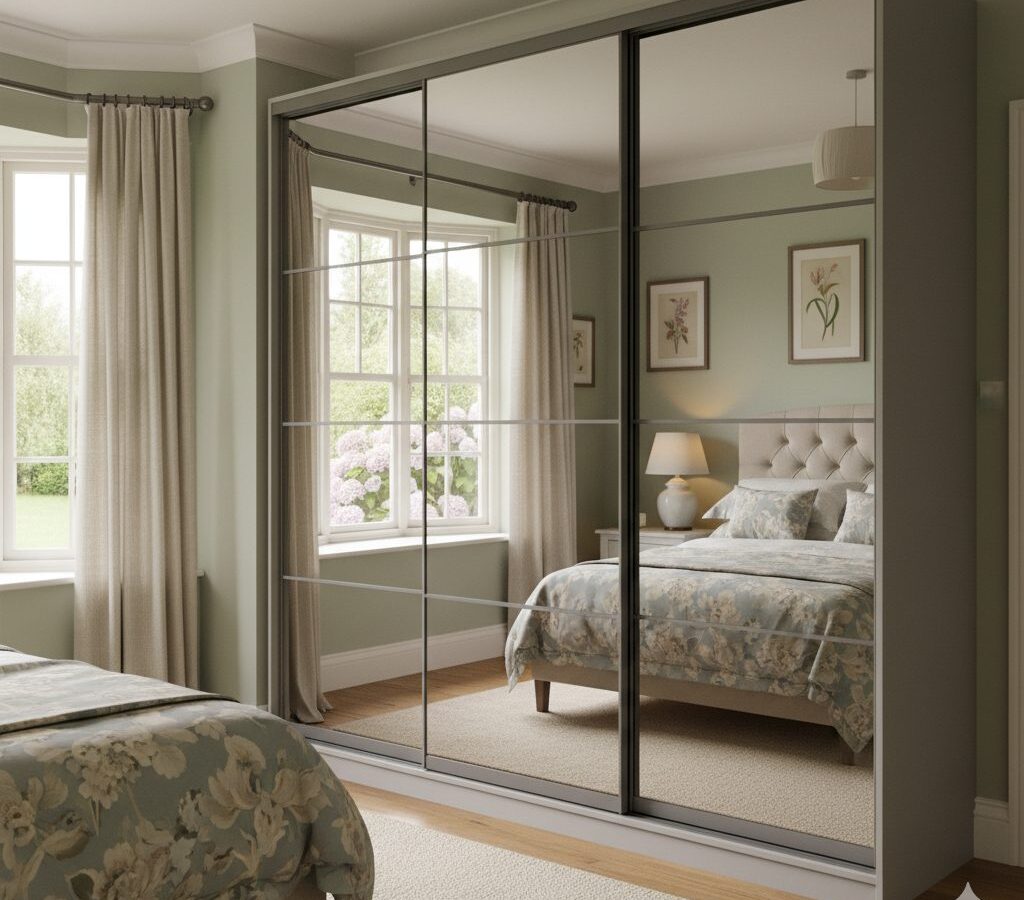
- Mirrored sliding doors make a small room feel brighter and bigger
What Is the Difference Between Sliding and Hinged Wardrobe Doors?
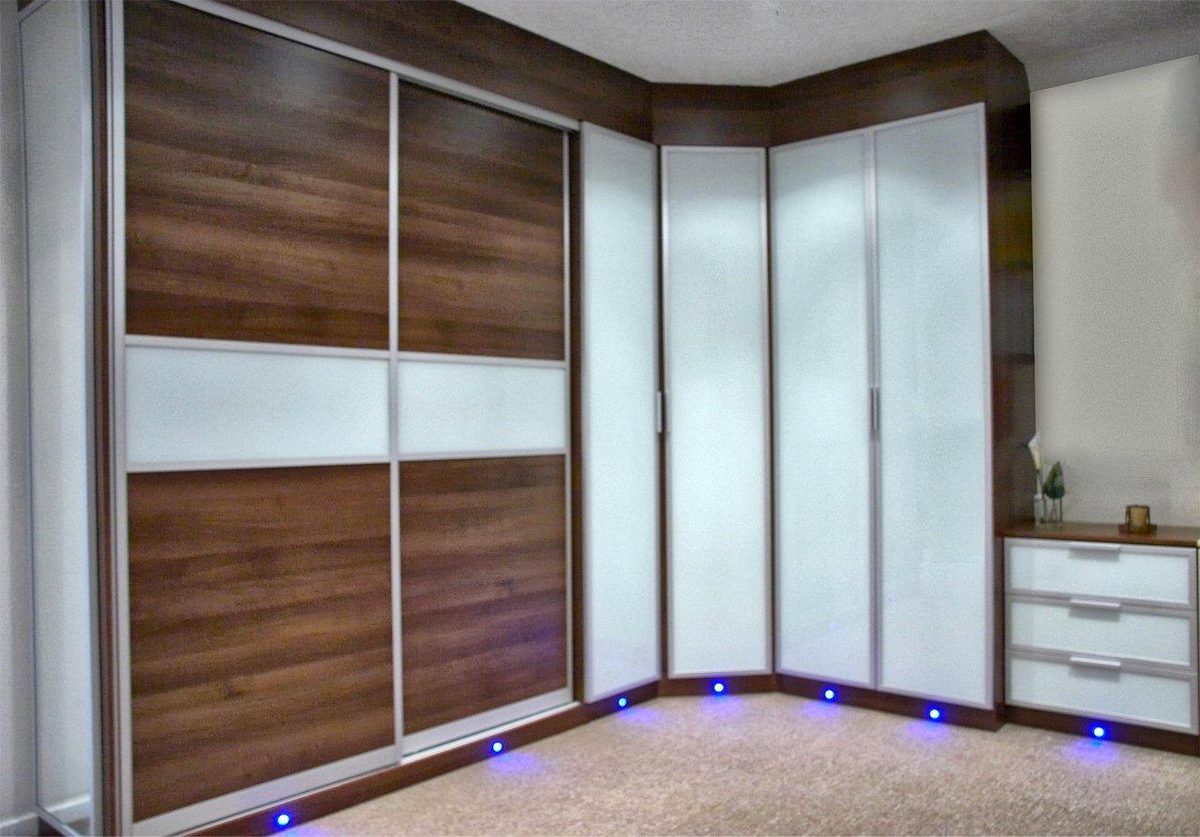
Hinged doors are fixed to the frame and swing outwards, while sliding doors run on a track and glide across the front of the wardrobe. Both are made to measure for a fitted wardrobe, and both come in dozens of finishes, from painted shaker frames to handleless matt panels and mirrored fronts.
Hinged wardrobe doors include shaker, panelled and flat slab designs. Sliding doors include mirrored sliders, glass-fronted panels and grooved timber-effect fronts.
Sliding vs Hinged Wardrobe Doors: A Quick Comparison
The table compares the two door types on the points that matter most day to day. Read it as a shortlist, then weigh each factor against your own room.
| Feature | Sliding doors | Hinged doors |
|---|---|---|
| Floor space needed | None, they slide across the front | Room to swing open, around 600mm |
| Access to the interior | One section at a time | Full, open view of everything |
| Best room size | Small and narrow rooms | Medium and large rooms |
| Sloping ceilings | Limited, tracks need even height | Flexible, built to any shape |
| Mirrored option | Very common | Available |
| Everyday upkeep | Keep the bottom track clean | Adjust the hinges occasionally |
Which Doors Suit Which Room?
The right choice usually comes down to how much space sits in front of the wardrobe and how you like to reach your things.
Choose sliding doors if
The room is small or narrow, the bed sits close to the wardrobe, you want floor-to-ceiling mirrored doors, or you prefer a flush, modern look.
Choose hinged doors if
The room is medium or large, you want to see everything at once, the ceiling slopes or has eaves, or you like shaker and period styles.
Explore the finishes on our fitted wardrobes page, then coordinate them with matching bedroom furniture.
Which Doors Are Best for a Small Bedroom?
Short answer for small rooms
In a small bedroom, sliding doors almost always win, because they reclaim the floor space a hinged door needs to swing open. Mirrored sliding doors go one step further and make the room feel larger and brighter.
If the room has a sloping ceiling or an awkward angle, the answer can change, since sliding tracks need an even height. That is where a bespoke design helps, and where our tricky spaces solutions come in.
Do Sliding or Hinged Doors Cost More?
Neither door type has a fixed price, because a fitted wardrobe is made to measure and the cost depends on size, materials, finishes and the interior fittings you choose. As a general pattern, mirrored and glass sliding doors sit at the higher end, while simple painted hinged doors are among the most affordable.
Instead of a set price list, we prepare a clear, fixed quote after a free home design visit, so you know exactly what your wardrobe includes before you decide.
How Do You Decide Between Sliding and Hinged Doors?
Run through this quick checklist and the right answer usually becomes clear.
- Measure the space in front of the wardrobe. Under 600mm of clearance points to sliding doors.
- Check the ceiling. A flat, even ceiling suits sliding tracks; a slope or eaves suits hinged doors.
- Think about access. To see everything at once, choose hinged.
- Consider light. Mirrored sliders brighten a dark or small room.
- Match the style. Shaker and panelled doors suit period homes; flush sliders suit modern rooms.
Can You Fit Wardrobe Doors Around Sloping Ceilings?
Yes, hinged doors and open frames fit sloping ceilings far more easily than sliding doors, because they do not rely on a full-height track. In a loft bedroom or a room with eaves, we build the wardrobe to follow the roofline, so you gain useful storage exactly where standard furniture gives up. Our guide to fitted furniture for awkward and sloping spaces has more ideas.
Sliding vs Hinged Wardrobe Doors: FAQs
Are sliding wardrobe doors more expensive than hinged?
Often, yes. Mirrored and glass sliding doors usually cost more than simple painted hinged doors, but the final price depends on size, materials and interior fittings, so we quote each wardrobe individually.
Do sliding doors give full access to the wardrobe?
Sliding doors open one section at a time, so you see part of the interior at once rather than the whole wardrobe. Hinged doors open fully for a complete view.
Can sliding doors fit under a sloping ceiling?
Only where the ceiling height is even across the opening, because the track needs a consistent height. For sloped ceilings, hinged doors or open frames work far better.
Choosing the Right Wardrobe Doors With Confidence
The best wardrobe doors suit your room, your storage and the way you use the space. Sliding doors save space in small and narrow rooms, hinged doors give full access in larger rooms, and a bespoke design tailors either one to sloping ceilings and awkward corners.
To see finishes in your own light and get a fixed quote, book a free home design visit or browse recent projects in our gallery.