In this guide
- What Is a Media Wall?
- What Does a Media Wall Include?
- Why Choose a Media Wall Over a TV on a Stand?
- Media Wall vs Standard TV Unit: What Is the Difference?
- Can You Put an Electric Fire in a Media Wall?
- What Size TV and How Deep Should a Media Wall Be?
- Where Can You Have a Media Wall?
- How Do You Plan and Fit a Media Wall?
- Media Wall FAQs
- Design a Media Wall Built Around Your Room
A media wall is a built-in feature wall that houses your television, media equipment and storage in one integrated design, with the cabling hidden inside and often an electric fire, shelving and mood lighting built in. This guide explains what a media wall is, what it includes, the benefits, whether you can add an electric fire, what size and depth to plan for, and how one is made and fitted. We design, build and fit bespoke media walls across Manchester, Cheshire and the North West.
The short version
- A media wall is built into the room, not freestanding like a TV unit
- Cabling runs hidden inside the frame for a clean, clutter-free finish
- An inset electric fire is a popular, flue-free feature
- Most media walls are between 150mm and 300mm deep
- Each one is bespoke, so it fits your room, your TV and your storage
What Is a Media Wall?
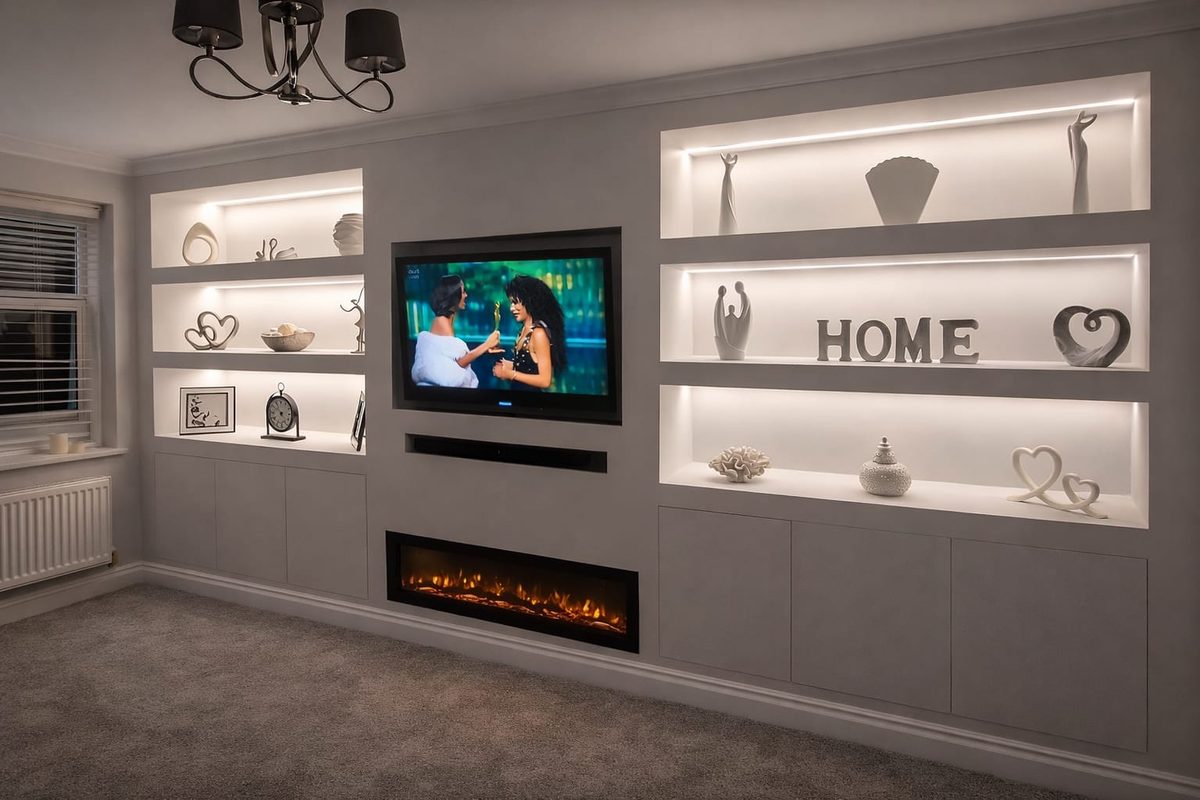
A media wall is a purpose-built wall, usually a timber frame finished in plasterboard or cabinetry, designed to hold a television and media kit with the wires concealed inside. It turns a plain wall into the focal point of the room and replaces the clutter of separate units, stands and trailing cables.
Media walls come in several forms. Examples include a full-height plastered wall with a recessed TV, a run of fitted cabinetry with a floating shelf, and a hybrid that combines an electric fire, display niches and closed storage.
What Does a Media Wall Include?
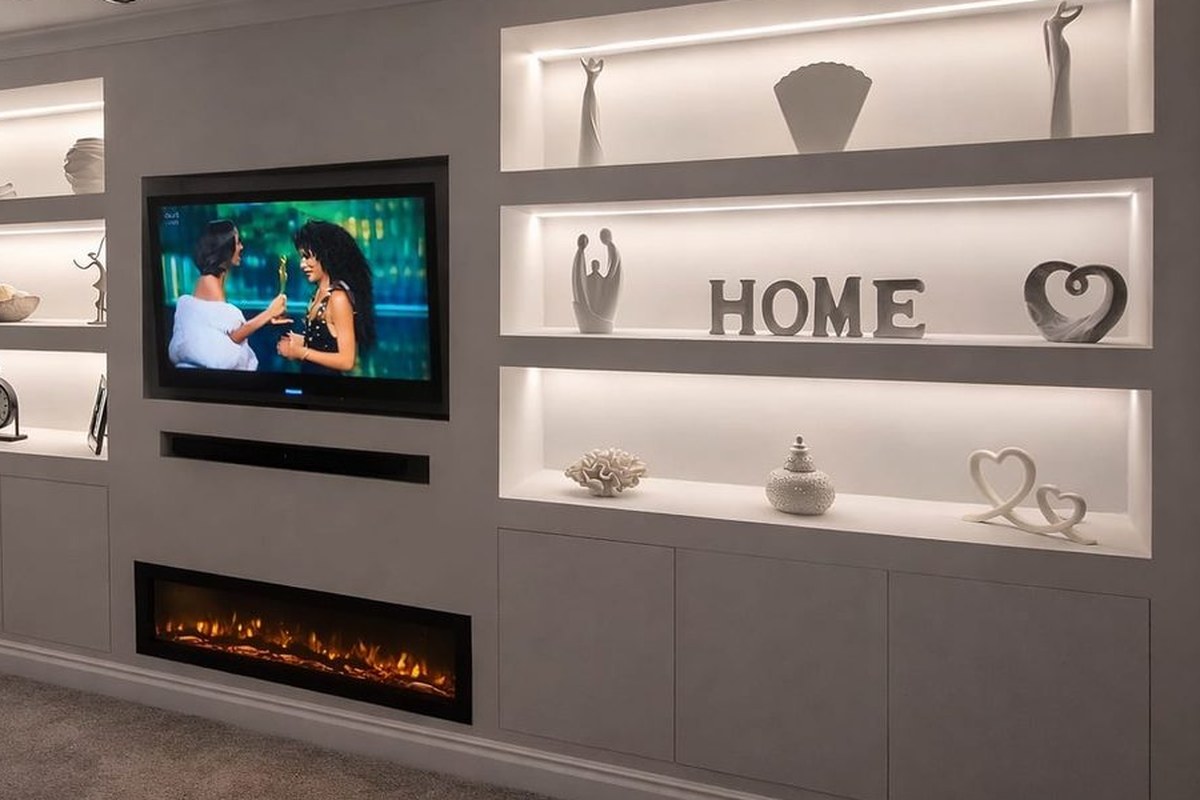
Every media wall is designed around the room, but most share a similar set of features. A typical build includes several of the following.
Recessed television
A neat recess or bracket sized to your screen, with the TV sitting flush to the wall.
Hidden cabling
Concealed routes for power, aerial, HDMI and speaker cables, plus space for a soundbar or console.
Inset electric fire
Flue-free warmth and atmosphere, with a safe heat gap planned above.
Display niches
Open shelving for books, plants and ornaments, often with LED lighting.
Closed storage
Cupboards and drawers to hide games, remotes and everyday clutter.
Integrated lighting
Warm LED strips that highlight niches and give the wall depth in the evening.
Because it is bespoke, a media wall can match the rest of your living room furniture for a coordinated finish.
Why Choose a Media Wall Over a TV on a Stand?
A media wall hides the clutter, frees up floor space and turns the television into a designed feature rather than a box on a unit. These are the benefits our customers mention most.
- Cables, plugs and boxes are hidden, so the wall stays clean and tidy
- Floor space opens up, which makes the room feel larger
- An inset electric fire adds warmth and a focal point in one
- Display niches and storage are built in, not bought separately
- The whole wall is designed to suit your room and your taste
Media Wall vs Standard TV Unit: What Is the Difference?
A standard TV unit is a freestanding piece of furniture, while a media wall is built into the room. The table sets out how they compare.
| Feature | Media wall | Standard TV unit |
|---|---|---|
| Fitting | Built into the wall, fixed in place | Freestanding, moved when needed |
| Cables | Fully concealed inside the frame | Often visible behind the unit |
| Electric fire | Can be integrated | Rarely included |
| Storage | Tailored niches and cupboards | Fixed shelves and drawers |
| Impact | A feature that anchors the room | A practical stand for the TV |
Can You Put an Electric Fire in a Media Wall?
Short answer
Yes. An inset electric fire is one of the most popular media wall features, and it is safe when the design follows the fire manufacturer’s stated clearances, usually a heat gap of around 300mm between the fire and the television above it.
Electric fires are the usual choice because they need no flue and produce no fumes, so they suit almost any room. We plan the opening, the power supply and the heat gap as part of the design.
What Size TV and How Deep Should a Media Wall Be?
Television size
The screen is chosen to suit the width of the wall and your viewing distance. Larger televisions suit bigger rooms and a wall with room to frame the screen with niches and storage.
Wall depth
Most media walls are between 150mm and 300mm deep, enough to recess the TV, route the cables and fit an electric fire. Shallow builds suit small rooms; deeper frames allow generous niches.
Where Can You Have a Media Wall?
A media wall works in any room where the television is a focal point, most often the living room, but also snugs, bedrooms and open-plan spaces. Because it is made to measure, the design changes to suit the room.
In a bedroom, a slimmer media wall can sit alongside fitted bedroom furniture. In a room that works twice as hard, we can fold in a discreet home office nook to one side.
How Do You Plan and Fit a Media Wall?
A good media wall starts with how you use the room. These are the steps we follow on a project.
- Measure the wall and confirm the television size and position.
- Decide on the features, such as an electric fire, niches and closed storage.
- Plan the cable routes, power points and any lighting.
- Choose finishes and colours to suit the room.
- Handcraft the wall in our workshop and fit it neatly in your home.
Media Wall FAQs
How high should the TV sit in a media wall?
Sitting eye level to the middle of the screen is the most comfortable height. We fix the television position first, then balance the fire, niches and shelves around it.
Can a media wall hold a soundbar and games console?
Yes. We build in ventilated space and hidden cable routes for a soundbar, console, streaming box and speakers, with access points so kit stays easy to reach and upgrade.
Does a media wall have to be full height?
No. A media wall can be full height for maximum impact or a lower run with a floating shelf, depending on the room and the look you want.
Are media walls a good idea in a small living room?
Yes. A shallow media wall of around 150mm frees up the floor a TV unit would take, hides the clutter and makes a small room feel calmer and more spacious.
Do you build the media wall or just supply it?
We handle the whole thing, from design and handcrafting in our workshop to fitting in your home, and we plan the power and cabling as part of the project.
Design a Media Wall Built Around Your Room
A media wall brings your television, storage, warmth and lighting together in one built-in feature, with the cabling hidden and the whole wall designed around your room. It is a simple way to lift a living room and cut down on clutter.
To talk through ideas and see finishes in your own light, book a free home design visit, explore our bespoke media walls or browse recent projects in the gallery.